

May We Be Unsettled
By Rev. Sarah Mayer
I’m still trying to figure out how to tell these stores…
It’s been a little over a week since my return to the States from my January delegation to Palestine.
After ten days in an unfamiliar place, I craved familiarity. I yearned for the nearness of the people I loved and for my silly creature comforts. So, when I got home, I quickly—and dare I say even eagerly--returned to my mundane, daily routine. And while I have, for the most part, settled back into normal life, not all of me is settled. My spirit is unsettled—deeply unsettled.
To the core of myself, I am unsettled by what I saw and what I heard in Palestine. None of those stories I could ever forget.
I cannot convey the whole of the experience--only a visit there for oneself can do that. But what I can do is tell the stores and ask that the hearers to be open to them. I invite you to become unsettled with me. Allow yourself to be moved by the stories that were given to me, which I now give to you.
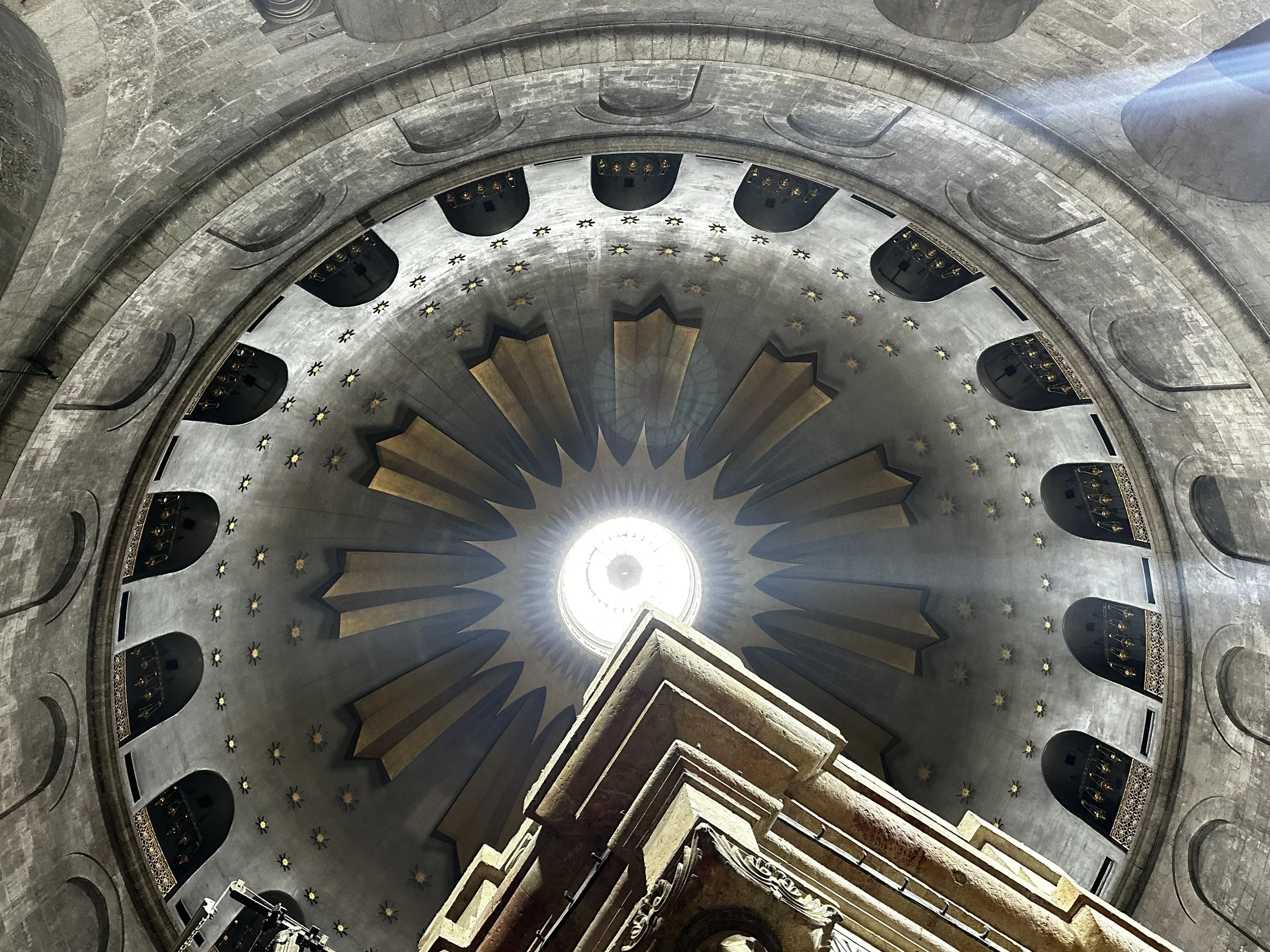
The second day of the delegation, we toured some of Jerusalem’s most iconic and sacred sites: the Al Aqsa Mosque, the Western Wall, and The Church of the Holy Sepulcher.
While these sites of stone and gold were impressive, it was the living stones—the people-- that held my attention.
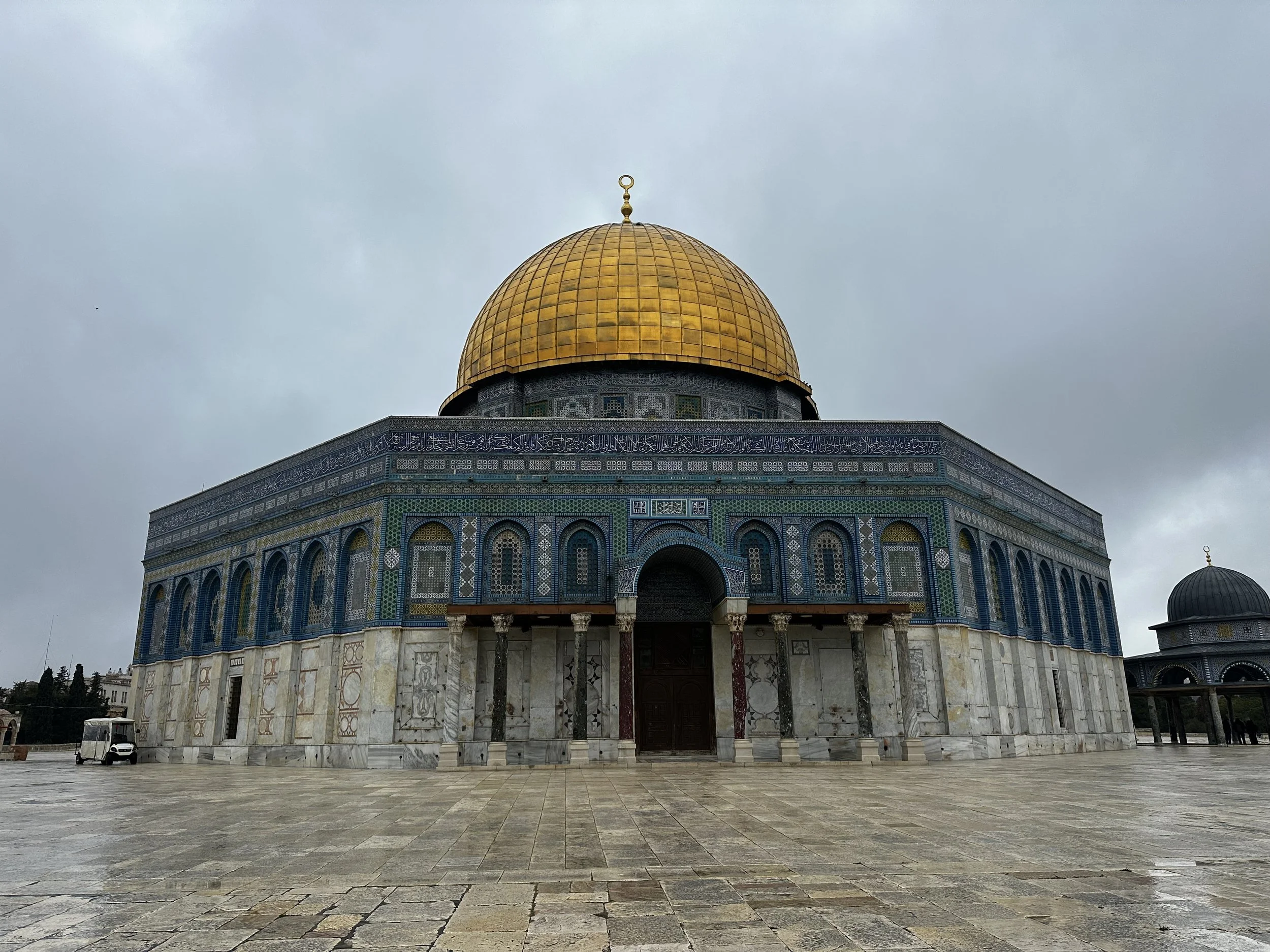
Our guide at Al Aqsa Mosque was one of the complex’s employees. (I’ll call him Aaron.) Aaron relayed to us the innumerable troubles the site has had. For example, one of the buildings on the complex had its windows shot out by Israeli soldiers. Despite having the necessary funds to do the repairs, the employees have not been granted permission by the government to begin. This meant that the recent heavy rains were able to inundate the inside of the building and completely soak the newly installed carpets. What could have been a standard replacement of a few windows has now turned into an extensive repair and restoration project thanks to the intentional and weaponized incompetence of the Israeli government.
Aaron further told us about how he recently tried to paint one of the offices on the compound—just a regular office space that was in no way public facing or of any real importance. After painting the office, Aaron was arrested and jailed for six months. Six months of jail time for painting an office without the proper permission…
After visiting the beautiful Al Aqsa Mosque, we walked across the city to the Church of the Holy Sepulcher—or Church of the Resurrection as it’s called in Arabic. While the church was beautiful, what was even more memorable was, again, the living stones. The incense, mosaics, and the gold leaf of this special place became mere distractions as we listened to the lived experiences of our guide.
Our guide at the church (let’s call him Jacob), told us about his own experience in jail.
Jacob was working as a translator for a group of UNRWA workers, and so he went with them to deliver critically needed medicine and blood to a hospital. As they arrived, IOF soldiers arrested Jacob. They accused him of not having the correct travel permit, despite the fact that he had been authorized to travel with UNRWA and had the permit present with him. Nevertheless, the IOF handcuffed Jacob and incarcerated him. The IOF put him in a freezing cold cell. He was handcuffed and bent over into an uncomfortable seated position. Food and water were also withheld from him. The guards taunted Jacob and the other prisoners by offering them frozen raw meat to eat.
Jacob went on to tell us that there with him in the cell were people who had obviously been taken at nights from their beds. They were in their pajamas with no socks or shoes on; in the inhumanely cold cell, they suffered greatly from the lack of proper clothing.
After four days, Jacob was finally released from prison. Unfortunately, though, even his release was harrowing. Jacob was dropped off on the outskirts of a settlement in the middle of the night without his phone and without any of his documentations. Jacob stood out there in the cold darkness until he was able to flag down a Palestinian driver coming in early for work. Using the stranger’s phone, he was able to call his family and return home.
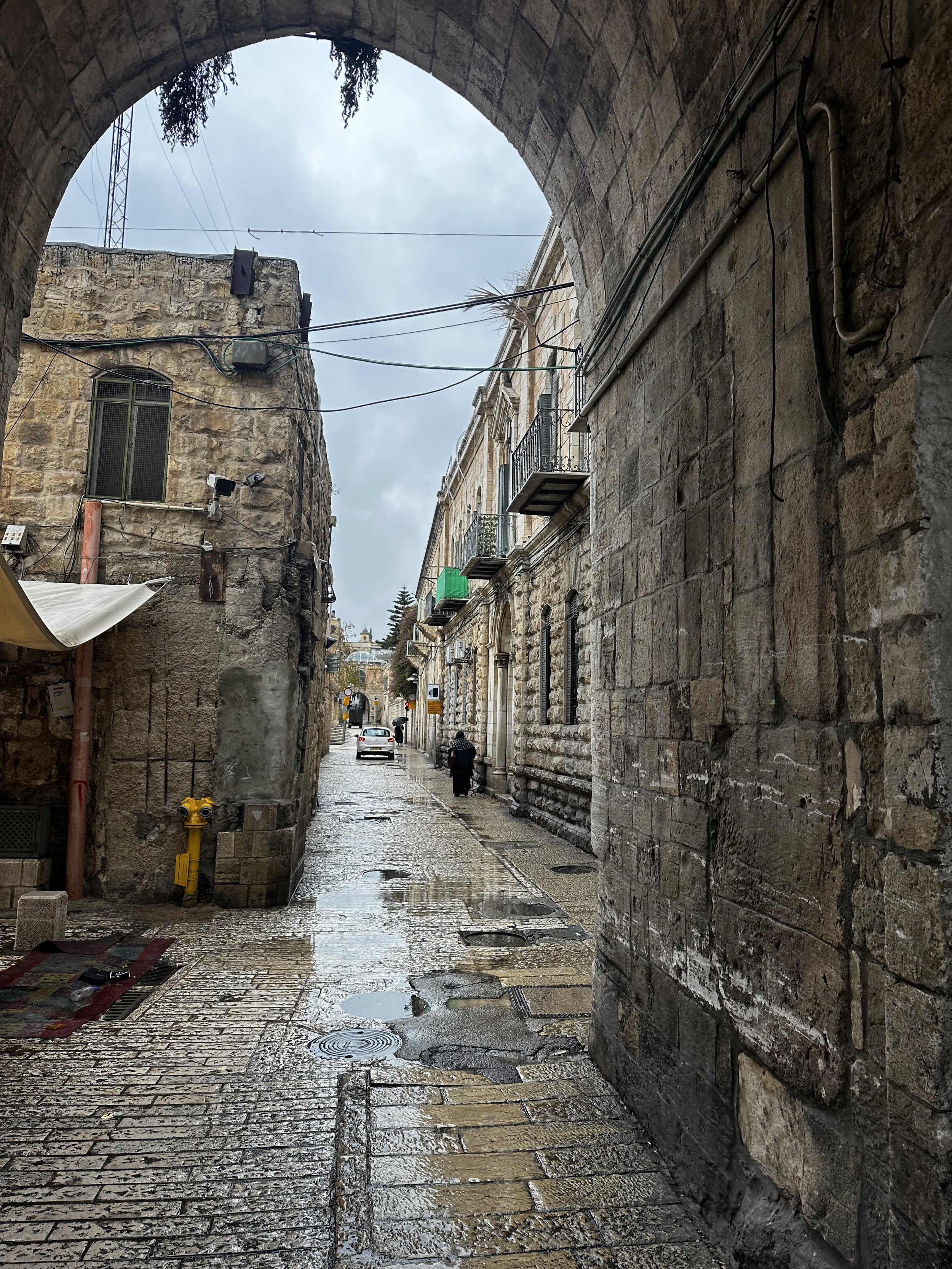
Living under occupation is a death of a thousand cuts. Arbitrary, nonsensical, and punitive restrictions make it nearly impossible for Palestinians to live their lives, to do their jobs, to be in community with one another, and to protect the places they love—the places of their people. Occupation makes it impossible for Palestinians to live their lives with any semblance of ease. Everything is hard to do—everything.
These are just two examples of the battles that Palestinians are dealing with daily. Beloveds, I pray we are disturbed by these stories. I pray we are unsettled by them. For we are called to be unsettled. As one body in Christ, any suffering of one part means the suffering of all.
From that deep interconnection, we are then called to unsettle the systems that allow for our Palestinian siblings to live under occupation. Systems that denigrate them on all sides. Systems that force them to live lives unworthy of the children of God that they are. They deserve better, and so do we.
May we unsettle these systems of death and destruction.
May we create cracks in apartheid walls where God’s light can break through.
May we compost the evils of empire to create the good fertilizer wherein God’s kin-dom can sprout and bloom.
Amen / Ameen
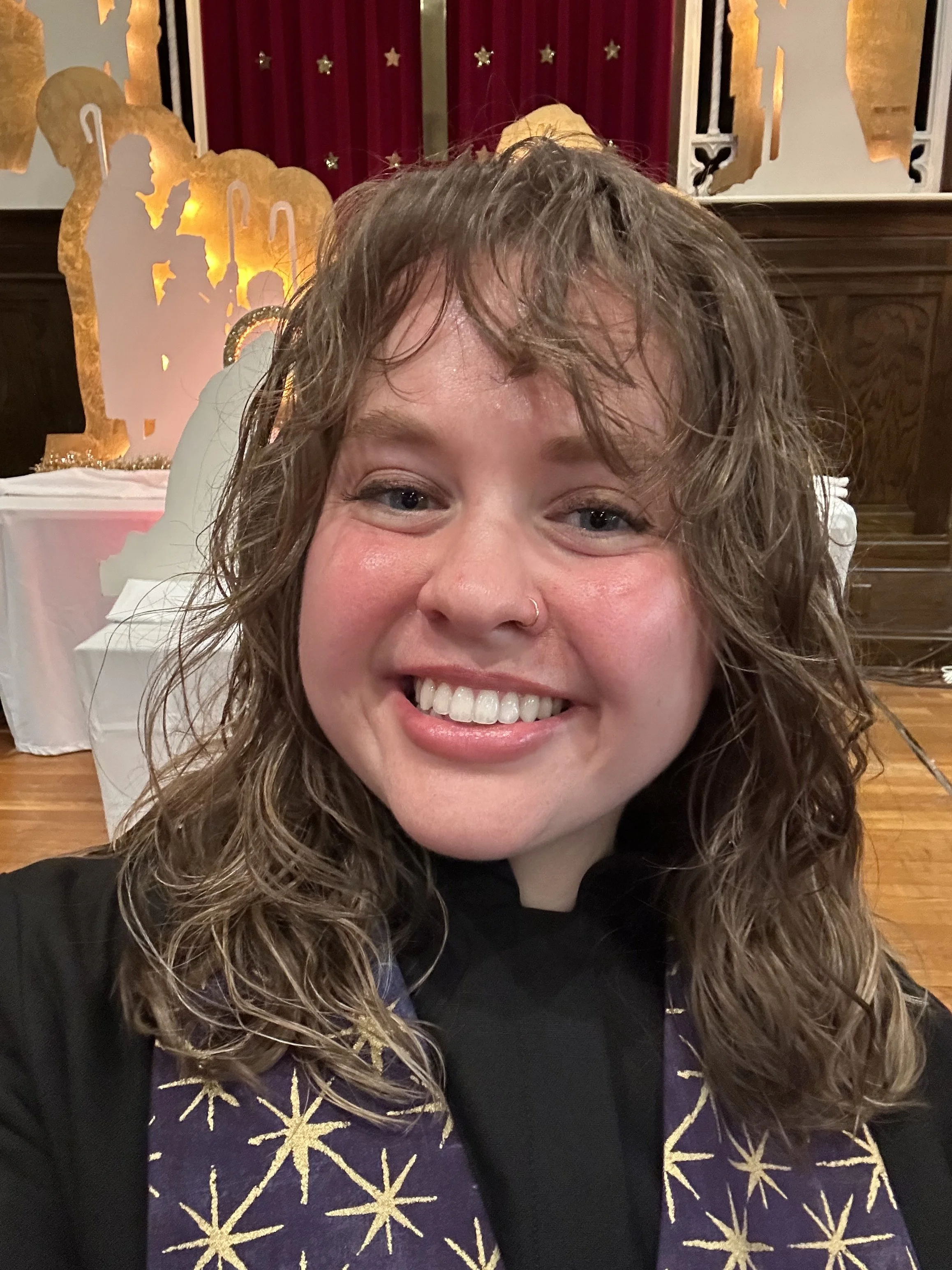
Sarah Mayer (they/she) is the pastor of Beloved Community Parish PC(USA) in Kansas City, MO. They are passionate about the church's role in helping us all get free and are eager to be in deeper solidarity with our Palestinian siblings! After returning home, gave a presentation to their parish on their experience. Check out their presentation here.