

Living Stones of the Land
By Sam Paulin-Wieland, MDiv
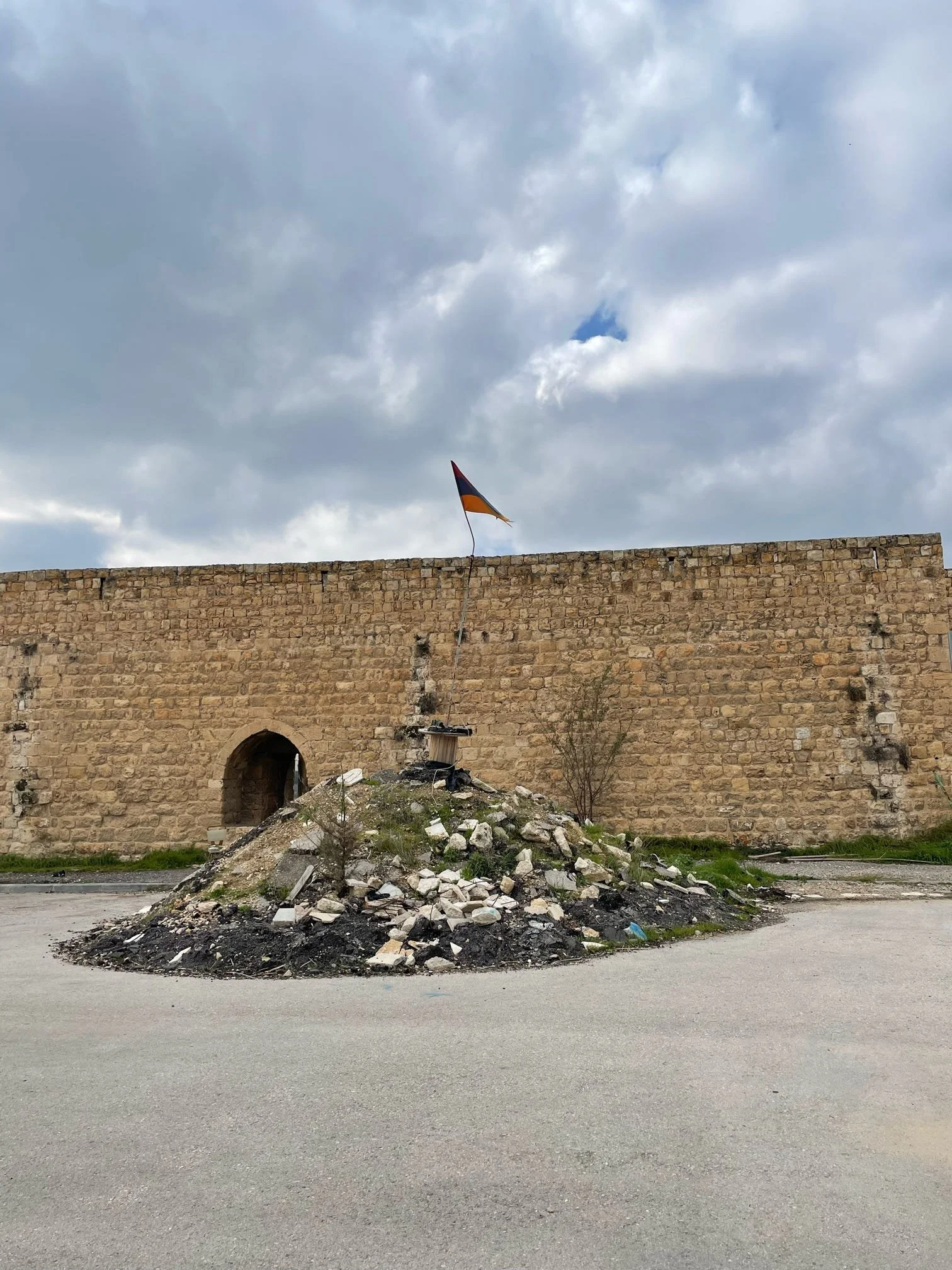
The Armenian flag placed among the rubble at site of resistance against Israeli attempts to seize historic and vital Armenian communal property in the Old City.
On a Saturday in the Armenian Quarter of Jerusalem’s Old City, a group of fifteen Americans learned about Palestinian Liberation theology in an environment displaying that theology in practice. The contested area we found ourselves in is housing a project of nonviolent resistance by an Armenian community (many refer to themselves as Armenian-Palestinians and Jerusalemites) against aggressive Israeli development. The story of this place is one in which young people push back against state and church collusion that threatens the existence of a school and many homes in their neighborhood of the Armenian Quarter. When we gathered at a makeshift outdoor communal space next to the parking lot, our delegation could see a cobbled-together fence blocking off the area from state encroachment, an Armenian flag sticking defiantly from the rubble, and a tent where one of the community members stays as a protector of the land.
…
Standing next to a large wooden cross in the parking lot, Sabeel Director Omar Haramy shared about the three pillars of Palestinian Liberation theology. Omar tells our delegation of folks from various religious backgrounds - but primarily Christian - that Palestinian liberation practitioners embody the beliefs of inclusivity, prophetic witness, and nonviolence. Omar shares that this theology was born out of the need for a concrete movement of faith against the genocide and persecution of the Palestinian people and is articulated and embodied by both clergy and laity alike. Throughout much of our time in the West Bank and East Jerusalem, this theology was deeply embodied by the Palestinian community members with whom we met. While many didn’t explicitly name the theological underpinnings of their actions, all seemed to embody a commitment to these three pillars as the way of life under apartheid.
In the face of ongoing Israeli state violence in aggressively apparent and more insidious forms, many of the Palestinian Christians we were privileged to meet voiced their commitment to, and embodied in their actions, the desire to face these death-dealing forces with the way of Christ. They spoke repeatedly of their deep connection to both their homeland and their faith. Omar shared that many Palestinians consider themselves “first Christians,” meaning that Jesus is made known not primarily through scripture studies or a good sermon, but through the guidance of their ancestors’ stories. He said, “We are the living stones of the land. We didn’t read about Jesus in the Bible, our grandmother learned from her grandmother that a rabbi came to Jerusalem.”
His words felt rooted in humanity in a way that our religious storytelling can sometimes miss. Stories are passed down from person to person, never separate from a flesh-and-blood people in a specific time and place. I am reminded of the power of storytelling and how faith is not merely an intellectual assent to a belief system but more like a living, breathing, grandmother who bakes bread and shares the story of the rabbi from Nazareth.
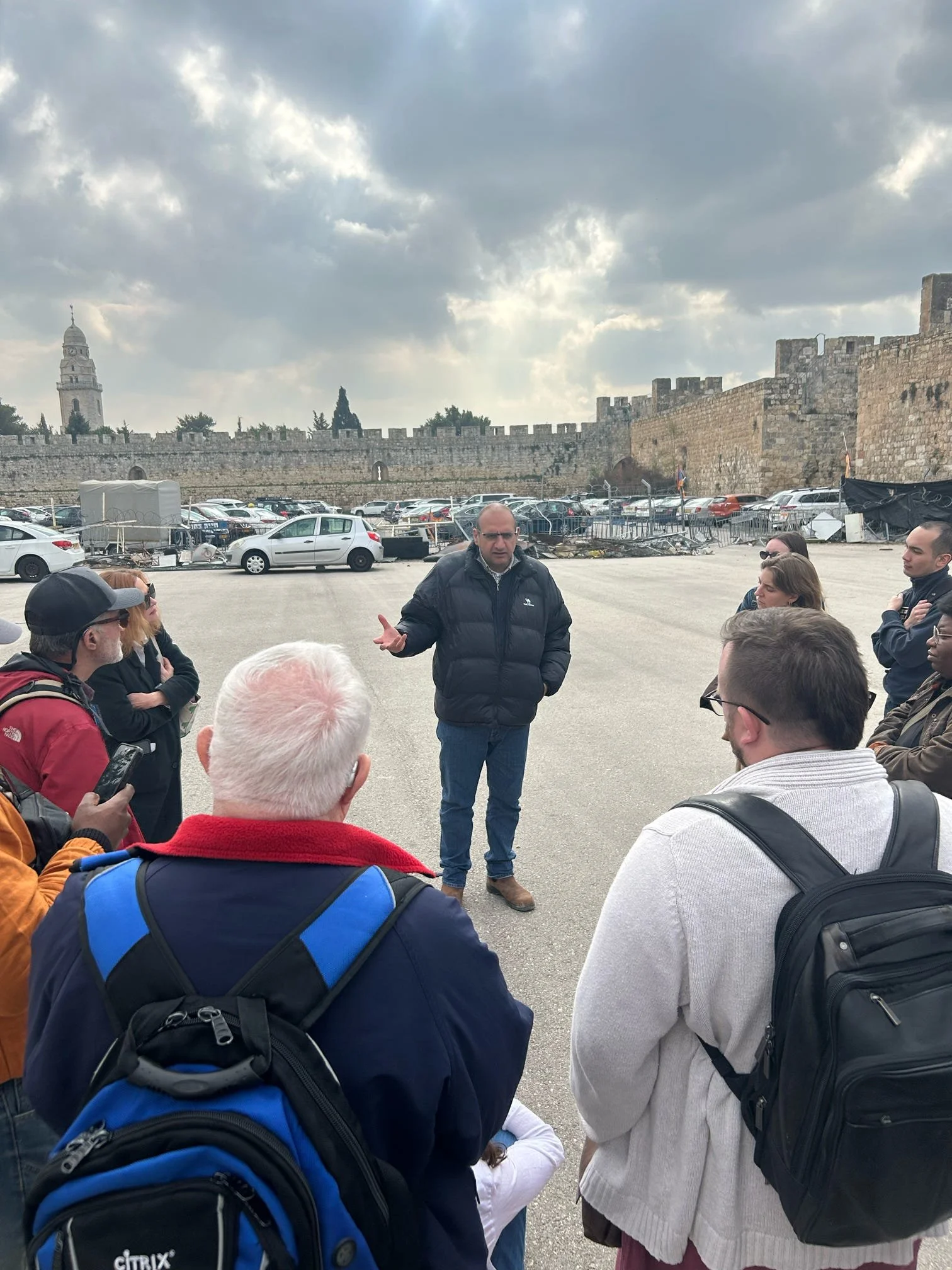
Sabeel Director Omar Haramy sharing with our delegation about Palestinian liberation theology in Armenian Quarter of Old City of Jerusalem.
Omar’s words spoken next to the cross on a site of steadfast resistance remind me that Palestinian Christians are not solely victims of a horrific genocide and the oppressed peoples of Israel’s settler colonial project, but a people deeply rooted in the living story of God in their lineage and land. That not only are they the leaders of their own liberation against apartheid and genocide, but they offer Christians worldwide the gift of theological wisdom that lives on in profoundly embodied ways. I stood in that place learning not only about Omar’s life and Palestinian sumud, but of faithful ways to follow the Christ who called all God’s children, who spoke and acted with prophetic justice, and was unafraid to challenge the systems of oppression with subversive nonviolence. In other words, Omar and other Palestinians we met preached with their lives.
As I write this, I am back in Illinois and have just returned home from attending a family member’s church. Before I left, they prayed for my trip to “Israel” and were excited to hear about the holy sites our group had visited. Throughout the service I kept returning to Omar’s words and was struck by the American Church’s desperate need for a more embodied faith, one unafraid to loudly proclaim in speech and action that all are God’s children, that justice is central to the heart of Christ, and that nonviolence has the power to profoundly subvert the state violence we witness in both Palestine and in the United States. May we who claim Christianity learn that to truly answer the question, “what does it mean to follow Jesus?” requires that we commit ourselves to following - through loving and costly solidarity - the guidance and ancestral wisdom of Palestinian Christians who have carried on the faith in the very land of Christ since the Incarnation.
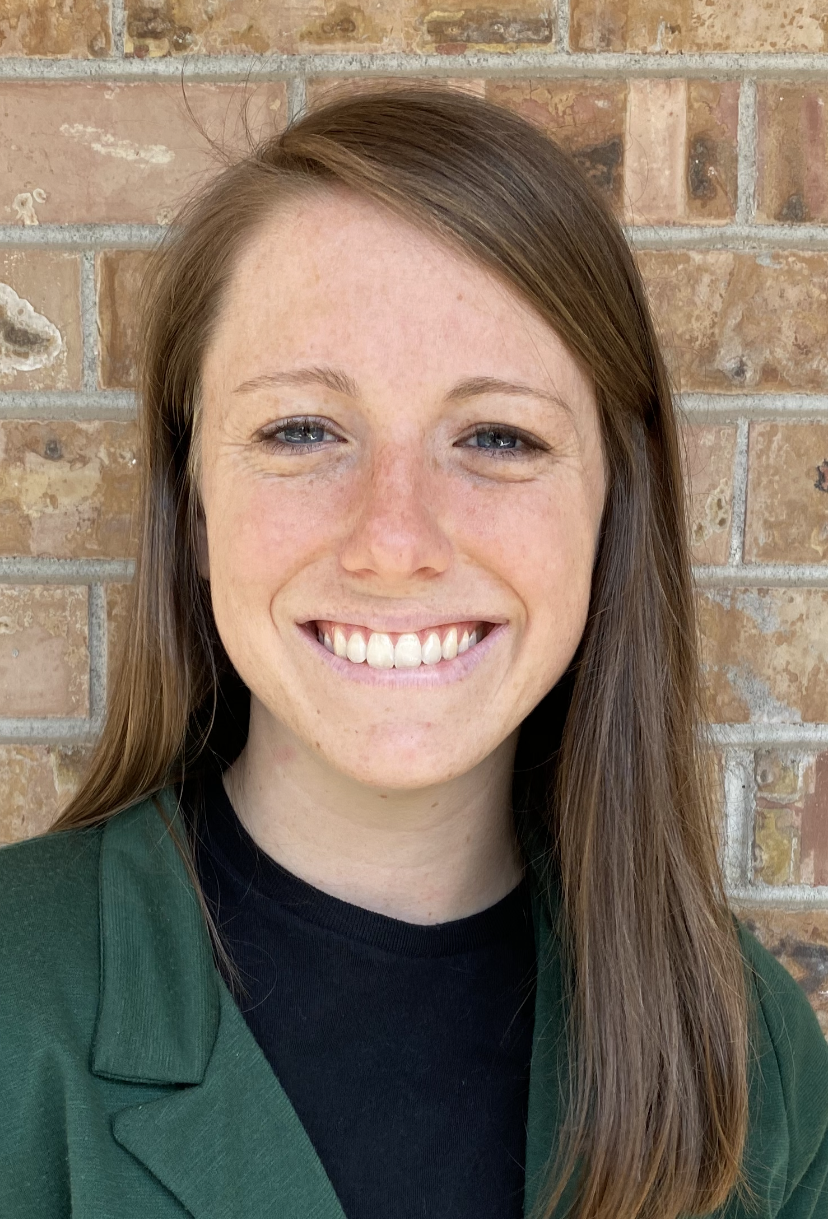
Sam Paulin-Wieland, MDiv
is a hospice chaplain starting the ordination process for the UMC. She lives in rural Illinois with her husband, Nate, and their dog Puddles.