

In Nablus, There is Life
By Angel Nalubega
Our last day in Palestine was spent traveling to, exploring, and leaving Nablus, a city in the northern West Bank. Nablus is part of Area A, governed primarily by the Palestinian Authority, along with cities like Jenin, Ramallah, and Bethlehem. Nablus is beautiful.
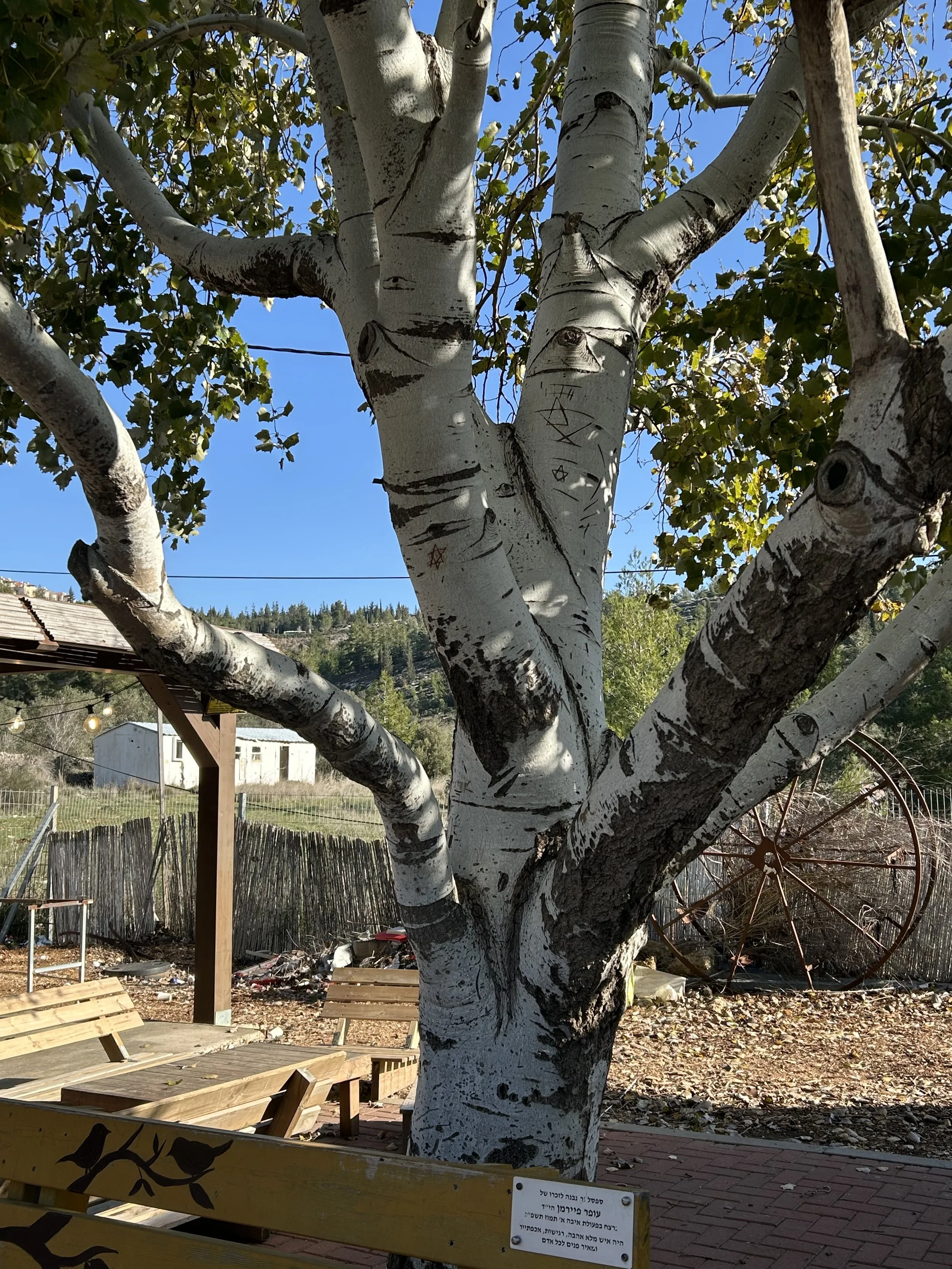
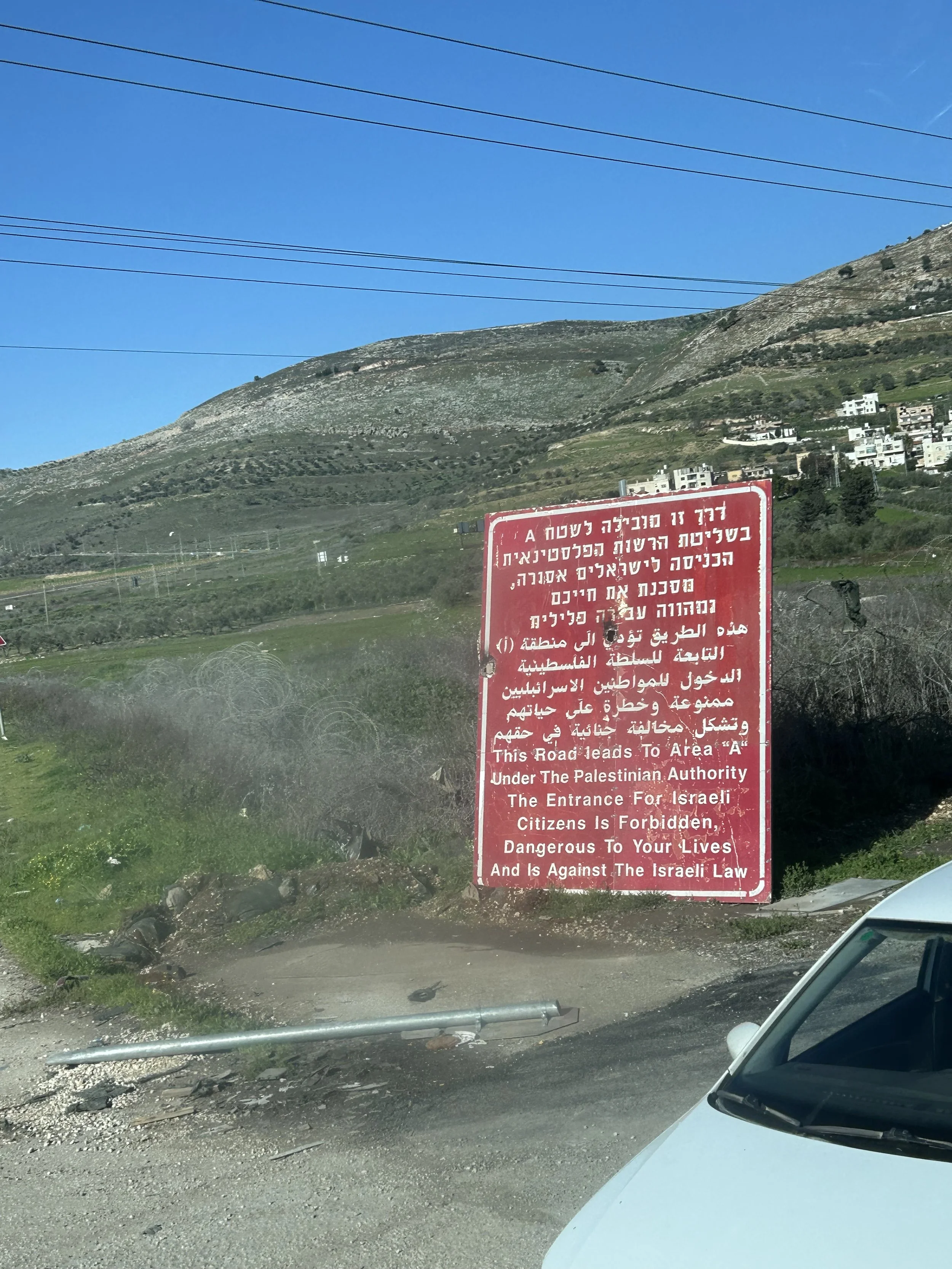
On the way there, we witnessed the harsh realities of occupation. Israeli settlements surrounded Palestinian homes with white caravans placed like sentries every few meters. We saw the wreckage and destruction of Palestinian houses damaged by settlers, Israeli flags hung at regular intervals as a show of domination, and roadblocks thrown across roads by Israeli settlers attempting to prevent Palestinian workers from accessing main thoroughfares and their own communities. We even saw an olive tree at a rest stop, where the Star of David was carved into the tree dozens of times. It was a disturbing sight. For me, it felt like even the air was full of signs of occupation, rather than life. However, throughout the course of the day that would change.
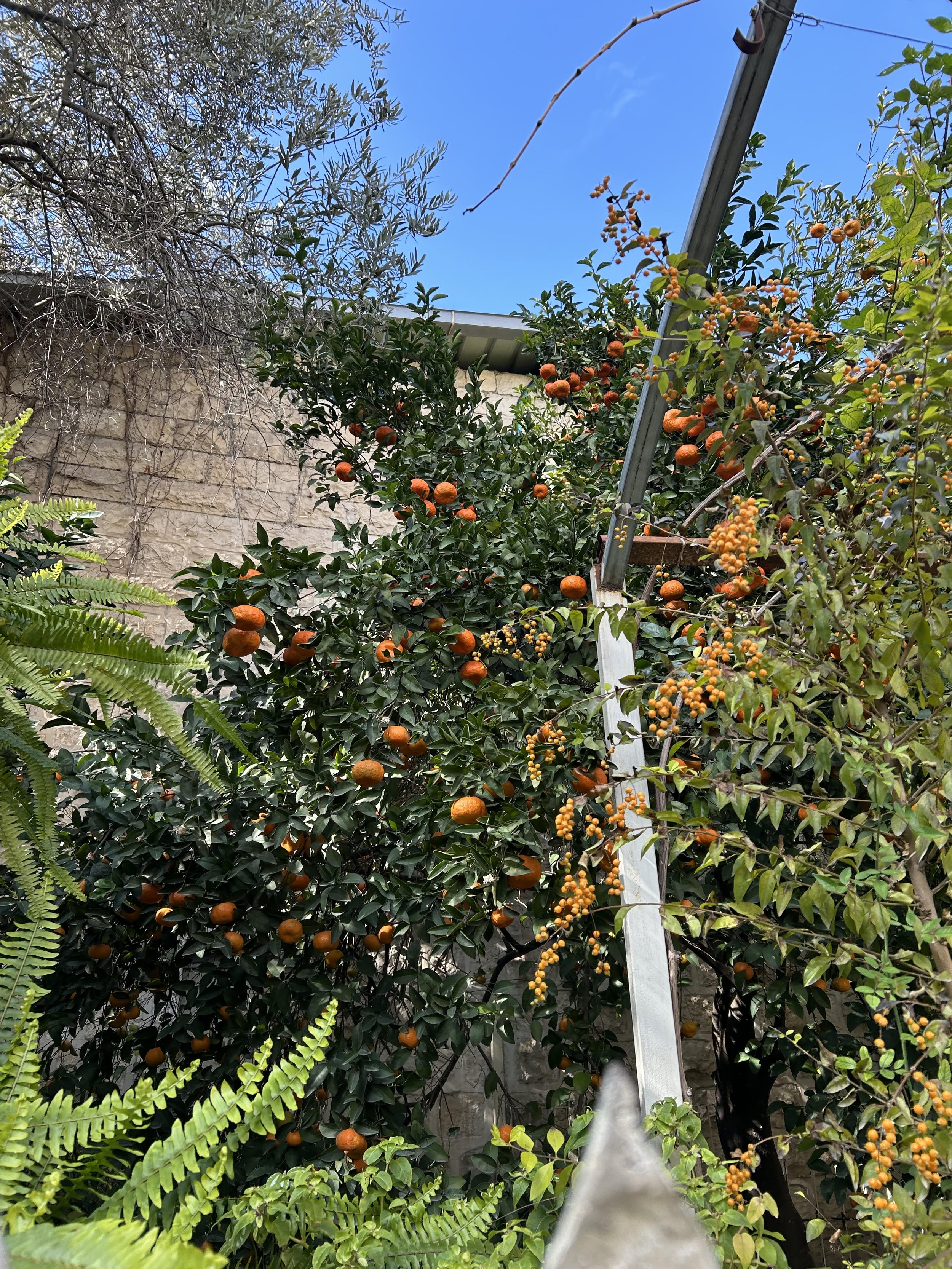
Our first stop was the Greek Orthodox Church at Jacob's Well. As soon as we walked into the compound, we were met with a gorgeous array of citrus trees, mainly tangerines, but also lemons. The lovely priest, Father Justinius, with his long beard, was carefully tending to the fruit trees. Something I continuously appreciated in Palestine was how wonderful the fruits were—everywhere we went, every day. I thought about how much love, perseverance, diligence, and defiance it must take for fruit grown by Palestinian hands to flourish.
Of course, we had to see the well. It was beautiful, rickety, and totally surreal. Heavy with history. The well-loved cups sat on the side. We drank the water, and I captured wonderful pictures of Isabel and Nate from our delegation, pinkies up as they sipped. I had to drink the water too; just in case it did something.
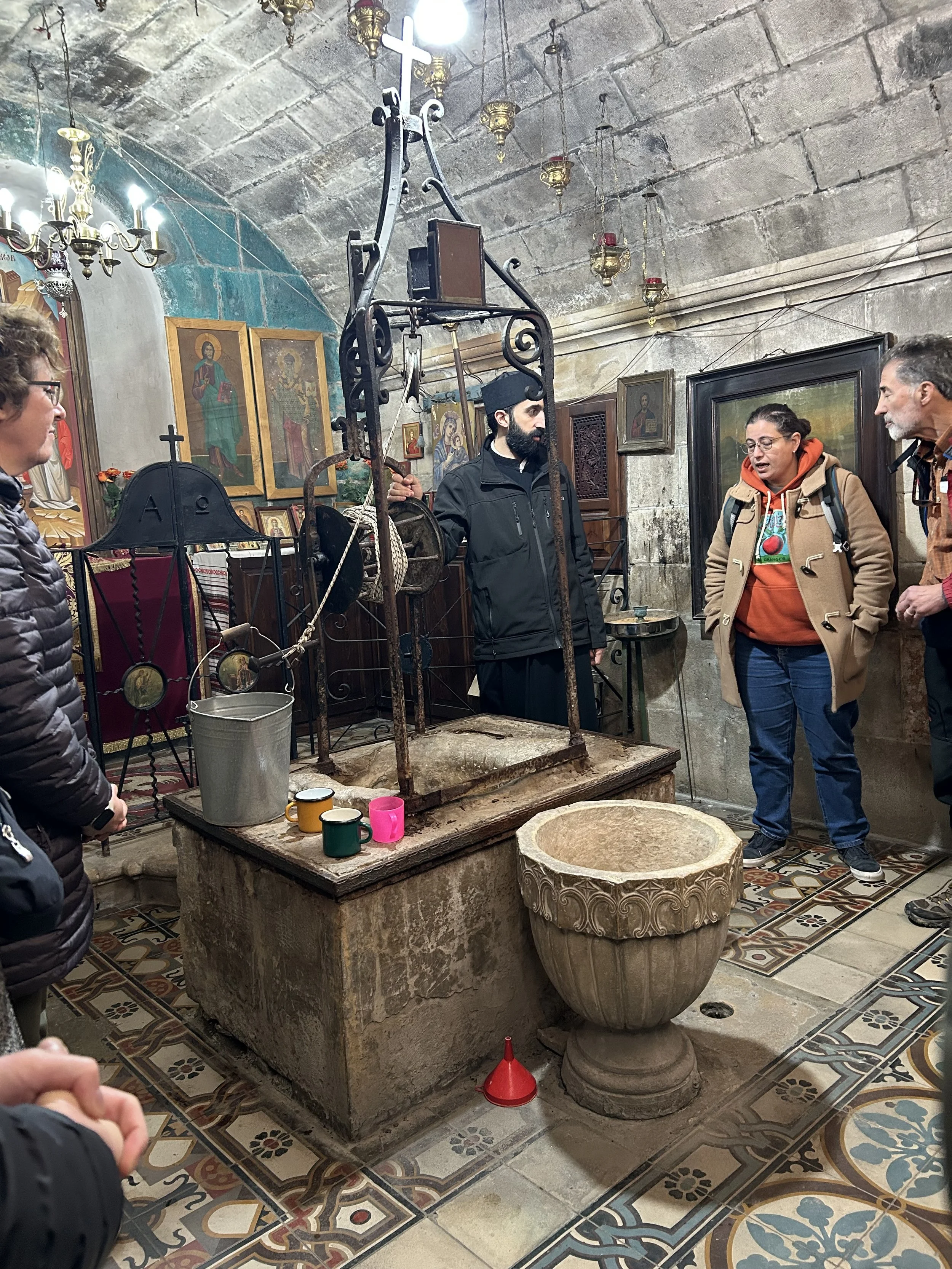
What affected me most was a story the supply priest told us (not Father Justinius, but another priest caring for the church that day). He explained that the previous priest before Fr. Justinius had been murdered right where we stood by an extremist attacker, his body chopped into 39 pieces. It felt morbid yet sacred that this place where Jacob met Rachel, where Jesus met the Samaritan woman, could be so peaceful, calming, and centering. A cool cup of water in the midst of the desert. And yet, the priest repeated several times: "No one comes to the church anymore."
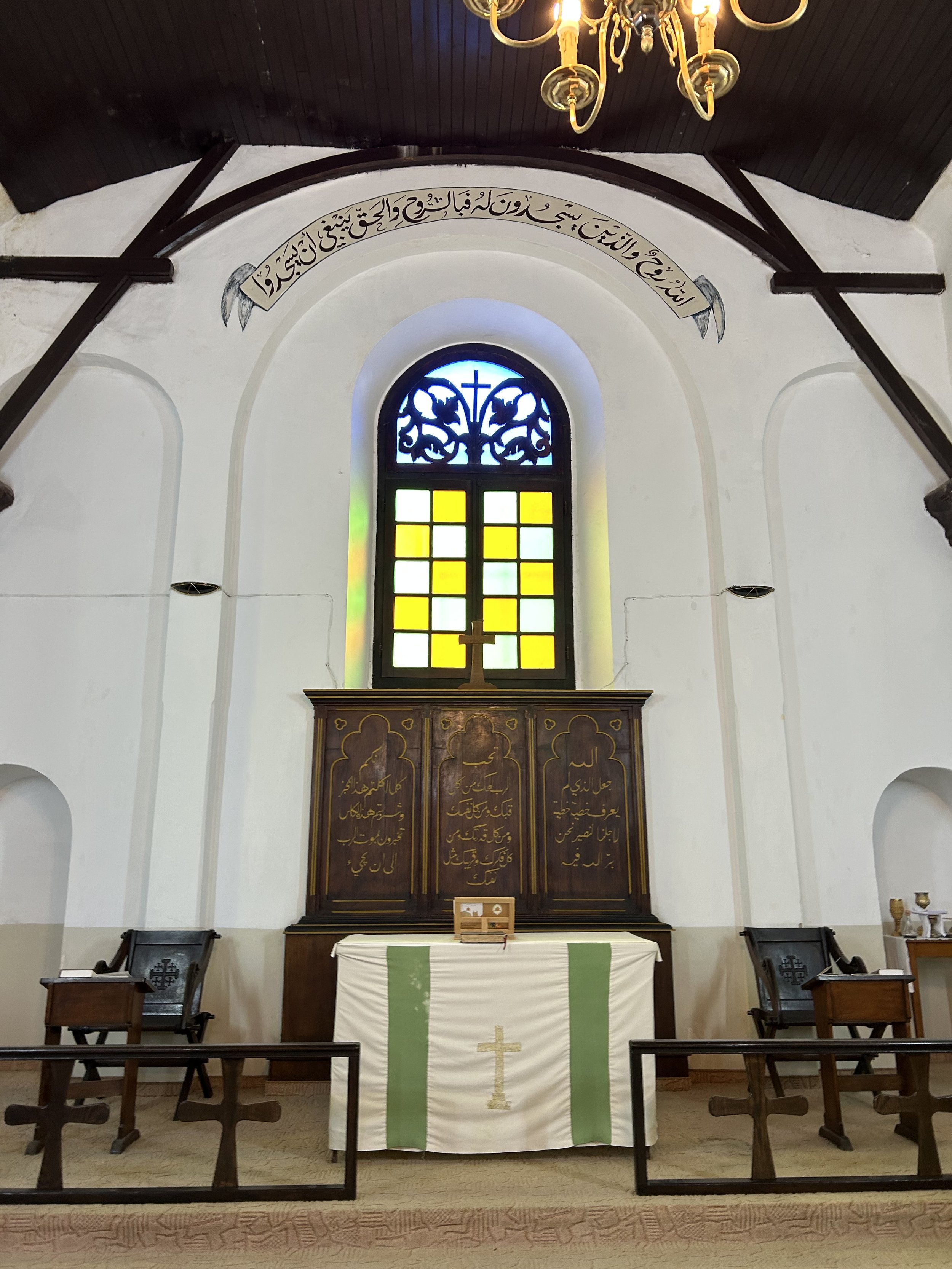
The Christian community in Nablus is struggling. We saw more evidence of this when we visited St. Philip's Arab Episcopal Church. Founded in 1848, St. Philip's has been a Christian hub in this community for more than a century. Yet in Nablus, a city of 300,000 people, only 700 Christians remain, a tiny sliver of the population.
Father Jamil, the Rector of St. Philip's, gave us a brief tour of the church and kindergarten. The altar displays a beautiful verse in Arabic: "God is Spirit, and those who worship Him must worship in spirit and truth." The kindergarten serves around 50 children and has to be regularly evacuated due to tear gas and shooting from the Israeli Army. Due to the shrinking Christian community, the church does significant ecumenical work, including an ecumenical Sunday school. They even have a partnership with a PC(USA) church in West Virginia, where Palestinian youth travel to experience life there. They're working on building a summer program for volunteers.
At one point during the tour, Father Jamil said something I'll never forget: "These children are surrounded by death. But we teach life." His words reminded me of a spoken word poem, "We Teach Life, Sir," by Palestinian poet Rafeef Ziadah, a piece I had watched in high school but never truly understood until I witnessed it firsthand.
The signs of death and destruction were everywhere. The streets of the Old City are lined with posters of martyrs killed by the Israeli Defense Forces (IDF) within the city walls. And yet, there were also signs of life: teenagers heading home from school, vendors selling tasty treats on the street (I ate the best thing—I still can't remember what it was, but I'll crave it forever), and a hole-in-the-wall Lord of the Rings-themed café. During the tour, we saw a clock tower that mirrored the damaged towers we had seen in Haifa. There was a sense of continuity across all of the Palestinian cities we visited. The remnants of what once was were still there. We visited a family-run soap factory (Nablus is known for its soap) and encountered a regular customer, a Samaritan elder with a crooked grin.
We then went to Burqin Church, the church of the lepers, which contains the oldest Anastasis (resurrection site) in Palestine. The baptismal font alone was 1,000 years old. The church was surrounded by beautiful fruits, some I had never seen before.
As we toured the church, a group of children gathered near the door. I waved at them, and their smiles grew bigger. Eventually, I went outside and said hello. It was wonderful to see that even in an occupied land, kids are still kids. They just wanted to get my Instagram and Snapchat (or sneak a picture, or five), or race me up and down a hill.
The thing I will remember most from this day is the defiance of life. The persistence of life. I think it's fitting that despite the separation walls, the acute suffering, and the constant devastation, there are trees that bear fruit—orange trees, lemon trees, tangerine trees. There are children laughing in the face of empire.
The children we met in Burqin represented Christ's final word over death: love, joy, laughter, the complete refusal to be bowed down. These children, who are so fiercely loved and cared for—like the olive trees, like the fruit trees—will always stay with me.
There is a reverence for life, a real love for life shown by the Palestinian people. The love that is shown is something I feel called to live into, respond to, and nurture within myself.
On this last day in Palestine, I felt a deep sense of gratitude, of love, of life. I feel blessed and honored to have been welcomed so graciously by the Palestinian people. I must love the Palestinian people and the land itself as fiercely as I love God the Father, God the Son, and God the Holy Spirit. My time in Palestine has convinced me of the Gospel truth: that there is life in spite of death, and the love of life will overcome every death-dealing power.